Book Review: The 36 Hour Day
- Jan 12
- 3 min read
Look, I never thought I’d be the person writing a book review about dementia. In my head, I’m still twenty three, wearing a flannel shirt and wondering if I should go see Singles again. But reality has a way of hitting you like a cold splash of water. One day you’re worrying about your 401(k), and the next, you’re realizing your parent is slipping away while they’re still standing right in front of you.
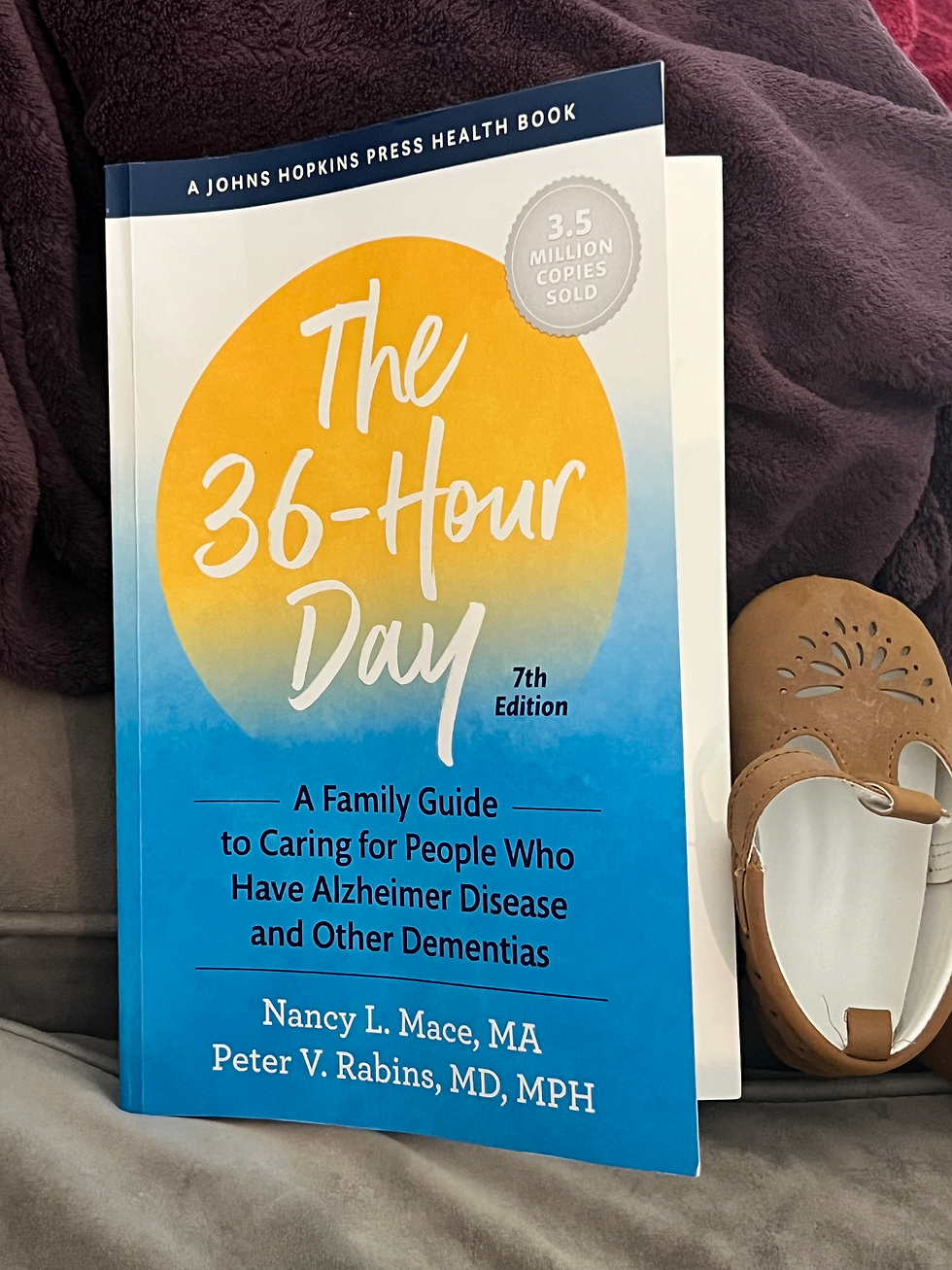
If you’re stuck in the "Sandwich Generation" like I am—squeezed between raising kids who think they’re "influencers" and caring for parents who can’t remember how to use the TV remote—then The 36-Hour Day by Nancy L. Mace and Peter V. Rabins isn't just a book. It’s a survival kit.
The "Bible" of Dementia Care
They call this book the "Bible" of eldercare and for once, the hype is actually real. First published in the early '80s (right when we were discovering MTV), it’s been updated a dozen times. It’s the definitive guide for anyone dealing with Alzheimer’s, memory loss, and the slow-motion train wreck that is cognitive decline.
The title itself—The 36-Hour Day—is the most honest thing I’ve read in years. If you’ve ever spent a night trying to convince your mom that, no, there isn't a stranger in the hallway, or spent six hours cleaning up a "bathroom incident" while trying to join a Zoom call for work, you know exactly what that title means. Time stops making sense.
What’s Actually Inside (Besides Truth Bombs)
The book is incredibly practical. It doesn’t get bogged down in too much medical jargon that requires a PhD to decode. Instead, it tackles the stuff that actually happens at 2:00 AM:
The Behavioral "Why": It explains why they get aggressive, why they wander and why they ask the same question fourteen times in ten minutes.
Safety Logistics: How to "dementia-proof" a house without making it look like a high-security prison.
The Medical Maze: Navigating doctors, medications and the legal nightmare of Power of Attorney.
The Emotional Gut Punch
What really resonated with my cynical Gen X soul, though, was the authors' focus on the caregiver. We’re the generation that was told we could "have it all," which turned out to be a lie. We just ended up doing it all.
Mace and Rabins are very clear: You are going to burn out if you don't get help. They give you permission to be angry, to feel guilty and to realize that you can’t sacrifice your own health on the altar of "being a good son/daughter." It’s that "put your own oxygen mask on first" advice that we always ignore until we’re gasping for air.
The book covers the "Stages of Caregiving" in a way that feels like a roadmap for a trip nobody wanted to take.
Stage | Caregiver Focus | The Reality |
Early | Denial & Organization | "Maybe they're just tired." |
Middle | Supervision & Safety | The 36-hour day begins. |
Late | Physical Care & Letting Go | Focus shifts to comfort and dignity. |
The Verdict: Pure Utility
Is it a fun read? No. It’s depressing as hell at times. But it’s also deeply compassionate. It’s like having a very calm, very smart friend sitting you down and saying, "Okay, this is going to be hard, but here is exactly what we’re going to do."
For our generation—the one that grew up as latchkey kids finding our own way home—there is something strangely comforting about a manual. We like instructions. We like knowing the rules of the game, even if the game is rigged.
The 36-Hour Day doesn't promise a cure. It doesn't tell you that "everything happens for a reason" (which is the kind of toxic positivity I can't stand). It just gives you the tools to handle the chaos with a shred of your sanity intact.
Final Thought
If your parents are hitting that age where the "senior moments" are looking more like "senior months," buy this book. Don't wait until you’re in the middle of a crisis. Put it on your shelf next to your old CDs and your copy of 1984.



Comments